Showing posts with label writing. Show all posts

Sunday, October 7, 2018

Where Will You Live?


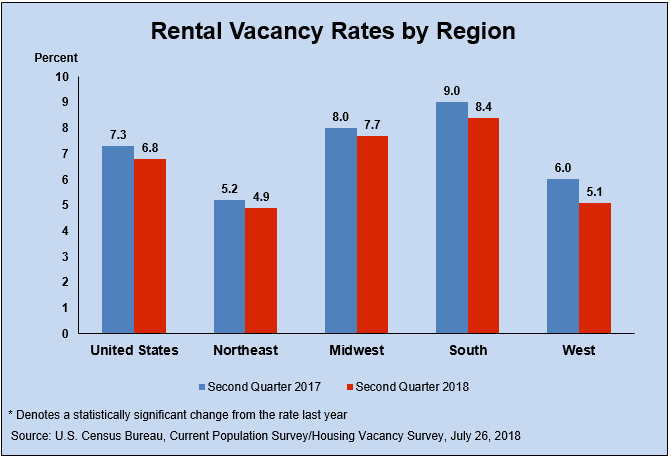
Finding a rental can be tough. That can be true almost anywhere in America these days. According census.gov, the site maintained by the U.S. Census Bureau, the rental vacancy rate in these United States was around 7% in the second quarter of 2018. That rate has decreased nationally and in every region. Which, of course, means that housing has become more competitive. The West and Northeast are the hardest markets to find rental housing in, while the south and Midwest are marginally better.

Wait. Why do you care?

Because the dynamics of the market have an impact on you. Yes, you. Writers often face particular hurdles in life that may be relatively uncommon to most people. You know, because most people get… a paycheck. While the reality is that much of the American labor force has shifted towards a freelance-based, independent-contractor-type role, many of the nation’s landlords and property management companies have been reluctant to acknowledge this. Because, quite frankly, they don’t have to. There are plenty of people lining up and waiting, sometimes interminable periods, to get into the exact same rental you may have your eye on. A vacancy rate of 7% would mean 93% of the other available housing units are not vacant. Or, to put it more clearly, they are occupied.

Authors, no matter how they are published, are often treated to highly irregular, volatile income shifts that probably will not look great on paper to a potential landlord [NOTE: THIS IS NOT LEGAL OR FINANCIAL ADVICE*]. Property managers rely on seeing a stable revenue source so they can assess the potential risk of the prospective tenant. It’s perhaps understandable if some people view property managers are greedy, robber baron fucks, but someone invested truckloads of cash to build those coveted housing units, and they won’t make that money back for decades in many instances. Until you or I figure out how to secure ten million bucks to erect a few apartment buildings, we have to play by the rules they set.

What some experts suggest is that those with irregular incomes, here’s looking at you, authors, save up to three months’ worth of rent before attempting to sign a lease or other agreement. This would help ensure one appears to be a better risk. The Lofts of Merchant Row, an upscale Detroit housing provider, suggests on their blog that one be reluctant to offer to pre-pay that three months’ worth of rent. Since this is coming directly from a housing provider, it seems like it might be reasonable information. The thinking behind this may be that you can’t threaten to (or actually) withhold what you’ve already paid. Sometimes, when there is a major landlord-tenant dispute, experts may suggest that the tenant withhold rent, simply because paying it in a timely manner implies that nothing was wrong.

If a landlord agrees to provide a housing unit in exchange for something, usually money, they are also agreeing, usually, to provide a reasonably safe, livable, and legal housing unit. If that housing unit is not livable, then it can be up to the property manager or owner to resolve the issues. Which, of course, they may not always be willing to do, since fixing a gas leak requires someone to stop playing solitaire or scrolling through social media to call someone. Someone they probably will have to pay.

So, then, experts and housing providers suggest that people with irregular incomes save up to three months’ rent prior to signing any rental agreements. This option may not work, however. All property management companies are different, and some may have different requirements or preferences. It is important, then, to not only have a game plan and savings, but to also strive to create the best, most professional impression. This includes over the phone or in written correspondence. This all boils to down to the risk tolerance of the individual directly responsible for getting you into (or not into) your dream apartment or rental. If you already have one potential red flag, i.e., irregular income, then one needs to be honest with themselves in their approach and address such concerns.

Moving on, if the 3-month approach does not work for whatever reason, experts suggest printing out a record of 18 months’ worth of payments. It would be best, according to various websites, to have statements that show your royalty or whatever income was at least three times that of the rent you are seeking to pay. So, if an apartment were 1200 a month, you’d probably want at least 3600 on every royalty statement you provided, according to industry professionals. This is a bit more in-depth than what may be required of someone with a steady paycheck, but… it does help reveal that you have the money to pay what you are agreeing to pay.

In addition, even if you can pay the desired amount, it may be a good option to also simply re-evaluate things. In today’s world, there are all sorts of housing options to fit the unique and dynamic needs of an ever-shifting labor force. One can always share a house with roommates. One could join a hippie writer’s commune. Who knows? As long as it’s legal and people are as safe as can be expected, one is free to get creative.

Unfortunately, one has to be creative in today’s world. A motherfucker just can’t catch a break. It might be worth noting that if anyone has a competitive advantage in this department, it is CREATIVE writers. Otherwise known as authors. If you’re making $3600 a month solely as an author, you obviously have exhibited a fair share of creativity, because that sort of money is abnormal.

Which is not to say that it CAN’T happen. It does happen, all the time. And, even if it hasn’t happened for you yet, it doesn’t really hurt to dream or plan ahead.

*This is not legal, financial, or professional advice. It was not intended to be such. For questions regarding any actual unique or specific professional needs, please contact the relevant experts or licensed professionals in your local area. Laws and regulations vary according to the jurisdiction. This is not intended to imply I am offering housing, nor is it intended to offer any guarantee of future housing success. This post is intended solely for informational purposes only.

Resources:


Exist and thrive, Grays.


Tuesday, August 14, 2018

Do BookBub Ads Work? One Author Shares The Secret to Success


Do you want to ditch your day job and turn your side hustle into a productive career, where you can work from home and make massive profits from passive revenue streams?
If you answered yes, you need to visit another site. This article is not for you.
Look, if we’re honest, authors know all too well that the publishing business is hard. One must be heavily invested in the cathartic art of telling stories and the vexing discipline of turning banal words into poetry. The act of creating a book, especially when that tome is fictional, requires a near-insane amount of time, commitment, technology, skill, and confidence. When it comes time to actually reveal that book to real people, it’s…hard. Harder than a frozen two-week-old candy. Harder than Dwayne Johnson’s abs. Harder than… well, you get the picture.
It takes a lot just to get to the point where an author feels ready enough (we’re never really fully ready) to release a book. What if I fail? What if I get bad reviews? What if no one likes it? What if the ending isn’t good? What if… Every writer I’ve ever known, no matter how they are published or how many sales they’ve had, they had experienced this whirlwind of emotions and self-doubt. It’s natural.

When those releases result in a few sales in the beginning, there is elation. Then, gradually, reality begins to set in. A launch happens, people actually buy and even sometimes review your book, and… the world goes on. Sales begin to fall, and for many of us, become non-existent for interminable stretches of time. We try to think of what we could have done better. We blame ourselves, our friends, our family, and even readers. And then, once all the ice cream in the house is gone and Impractical Jokers reruns aren’t funny anymore, we go back to the drawing board. We buy ads. Because we’re adults, and we realize of the 6 or so billion people on the Earth, almost none of them have heard of us. The only way to reach them is to go where they are.

The opening sentence may be a bit misleading. You and I, we can become highly successful, rich authors. It’s unlikely, but it can happen, and we need this hope to help drive us forward. Nonetheless, there is nothing passive or easy about being an author. It requires a lot of work. In fact, it may require considerably more work than whatever job it is you hate. As your own boss, you have your own worst critic with you every day to revel in your mistakes. You have to do your own taxes, your own planning, and…your own marketing.
 Even one novel, in my opinion, is a success, no matter the sales. Let me be clear on that. Writers are part of my tribe. Sometimes we need to redefine terms to help us navigate our own paths, and this may be true in publishing. Writing just one book is productive. However, it may not be productive enough for one to leverage that towards a profitable career.

Now that all of that is out of the way, let’s get to the good stuff: ads. In this post, we’ll be exploring BookBub ads. Specifically, BookBub Pay-per-click and CPM (Cost per thousand) ads. Before moving on, I’m going to offer a short refresher for those unfamiliar with some of the jargon.

PPC: Pay-per-click. You pay for every click.
CPM: Cost per thousand. This is a major metric with most advertising venues. This metric is based wholly on impressions. This is the cost to make 1000 impressions.
CTR: Click-through rate. This is the amount of people who click your ad in relation to the number of impressions. If you see a small number of clicks, that’s okay. That’s normal. Experts don’t fully agree, but the consensus is that a CTR range from 3-5% is considered good.
Conversion: These are the clickers we referred to above, except, they’ve done exactly what we wanted, and downloaded our book. These are the people we want. This is what the entire game was about, is converting readers into YOUR readers.
CPS: Cost per sale. Some places calculate this a bit differently, and have different names for it. Amazon Marketing Services has a metric they call Acos. Either way, no matter the acronym or term, this looks at what you paid and what you earned. If you spent $12 and got 2 sales, that’s $6 a sale. Considering the fact that many authors set their price point at 99 cents, and net a mere 35 cents of that, $6 is quite high.

Whew. That was a lot, right?

But, wait…there’s more.
Bookbub ads work in two main ways: featured and CPM/PPC. Again, with this post, I’ll be dealing with the latter. It is essentially undisputed that BookBub’s featured promotions, when one can get them, are one of the best things in the business. Everyone, try to get a featured promo. What is considerably less clear is whether or not their PPC ads are worth it. Much of the research I came across was published on BookBub’s website or was in way sponsored by the company. While I love businesses working hard to establish themselves, and love BookBub for striving to assist authors, I avoided using much of this data. It’s hard to maintain the appearance of objectivity when you cite the company’s own statistics.

So, then. Are they worth it?

The full answer is: I don’t know. BookBub is a large business that consistently attracts big pools of dedicated readers. That alone is worth something. No other existing advertising platform boasts this level of brand loyalty and recognition within a narrow niche. Readers are hard enough to find. Bona fide bibliophiles who read multiple books a month… One of the drawbacks of other popular advertising media for authors is that they are too general. Facebook allows you to target based on certain things, but authors, and even Uncle Zuck have no way to independently verify that someone who “liked,” a page actually likes it. Amazon gives you even more flexibility, allowing you to select up to 1000 keywords. Nonetheless, if someone searches booksbooks (I always get that in their recommendations, for some reason), they may not be searching for post-apocalyptic YA romance werewolf Nazi alien mystery steampunk books. If someone is searching for Jim Butcher, they probably want to find him in their search results. Is BookBub’s niche audience enough to justify ads on that basis alone?

According to a January 2017 blog post [1], one author had a 4% conversion rate with BookBub’s CPM ads. It is worth noting that the PPC feature is a recent addition to a program that is, in and of itself, fairly new. It’s still a nascent program, and that can only mean the price is lower now and readers haven’t been inundated to the point of avoidance. The author reported a number of sales, though he ended up paying a stated $12 for each reader. He claimed a CTR of .4%. The CPM was 2.30, and the CPC figured out to around a half dollar each.

$12 for a single sale is bad. A CTR of less than a percent is also bad. Nonetheless, it must be noted that, at the time this author ran their experiment, PPC ads were not available. When BookBub sends out these ads, they place them in the bottom of emails. When someone opens the email, BookBub considers this an impression, even if the recipient did not scroll all the way down to where the ad sat. Under those conditions, it would be inordinately difficult to even get your ad in front of people. I do not recommend using the CPM version of BookBub’s ads for this reason. The goal of advertising is to get more eyeballs on your book page. Impressions of an ad, even if that ad does include your book cover, are relatively meaningless.

In  August 2018, I used the PPC ads from BookBub for the pre-order of my latest novel, A Killer’s Secret. I set a budget of $35 over 7 days. I set my bid one penny higher than the highest bid they showed in their average range. My effective CPC was around 70 cents. During the first few hours of the campaign, I had almost 1000 impressions, 2 clicks, and one sale. I had only spent $1.40 during that time. BookBub made it easy for me- someone inept at graphic design- to make an ad creative, though they limited the text to 60 characters.
One important note is that BookBub does not allow you to use keywords with these ads. They only allow you to pick comparable authors, books, and/or genres. I picked five authors and 3 genres for my own ads. BookBub allows you to advertise on the three main Amazon sites, which are in Canada, the U.S., and the U.K. Since I have had a number of readers in the EU and UK with my first release, Traits of Darkness, it was convenient to have this functionality.

Overall, I felt satisfied with my experience, and will likely use BookBub ads in the future. The CTR was not great, but I did only pay per click, so all those people who may have seen my book cover were free. It wasn’t terribly expensive, and resulted in almost immediate sales- something I can’t say I ever derived from Facebook ads. They also were easy to set up, and took less time than making coffee.

Some links are included below for your convenience. Hopefully ya’ll enjoyed this post. Please leave your thoughts or comments below. I’d love to hear of your experiences. Please also bookmark this website if you liked this post or found it informative.

Thanks for reading.

As a quick final note, if you enjoy fast-paced science-fiction novels with compelling characters and visceral plots, A Killer’s Secret releases on August 18. https://www.amazon.com/Killers-Secret-Sci-fi-Thriller-Tales-ebook/dp/B07DWR4H2P I’ll be publishing excerpts of it on this site.

Links:


Sneak Peek: Alpha Unit

          Here is an excerpt from my newest novel, Alpha Unit.  Alpha Unit is Book Two in the Zombie Unit Series, and it takes place in ...